The Real Cost of Starting a Webcam Model Business: A Complete Expense Breakdown
Thinking about camming? Discover the true webcam model business startup costs and expenses, from equipment to marketing, in this complete financial breakdown.
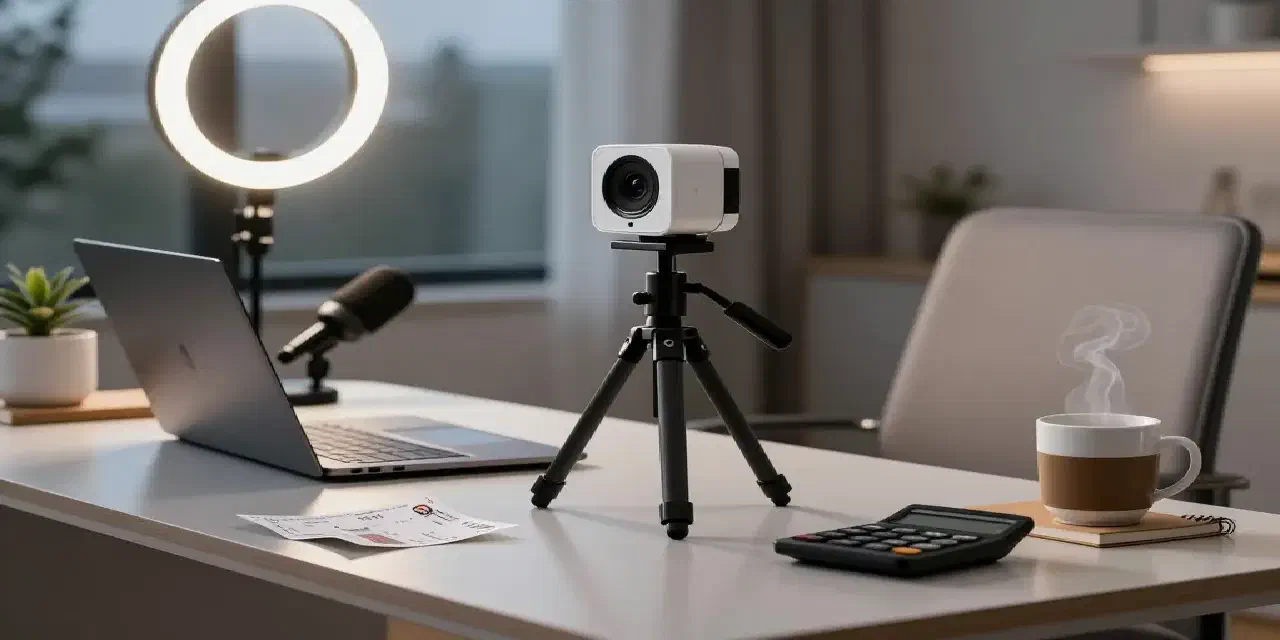
Most newcomers are drawn to webcam modeling by the promise of flexible hours and big paychecks. But the financial side of this business is far less glamorous—and costs far more than a laptop and a ring light. Between professional cameras, studio-grade audio, platform fees, chargeback reserves, and marketing, the expenses pile up quickly, quietly eating into whatever you earn. This guide lays out every cost you’ll face when launching your webcam business. You’ll see exactly what to budget upfront, what recurring costs to plan for, and where newcomers typically get blindsided. By the end, you’ll have a clear expense roadmap to build a sustainable budget and protect your profits before you ever press “go live.”
Understanding the Initial Equipment Investment
Before you broadcast a single frame, you need gear that can actually deliver a professional experience. The good news? You don’t need a Hollywood studio to start. The bad news? “Good enough” is rarely as cheap as you hope. The gap between a blurry, poorly lit stream and a crisp, polished one is often the difference between casual viewers and loyal, paying regulars.
Core Streaming Hardware
A functional starter setup requires four pillars: a decent camera, a quality microphone, a computer capable of smooth video encoding, and basic lighting. You can assemble a reliable entry-level configuration for roughly $500 to $2,000, depending on how much you already own. Starting from zero? Expect to land near the middle of that range. On the flip side, a high-end studio-grade rig—think multiple camera angles, professional audio interfaces, and broadcast-level lighting—can easily push your total beyond $5,000. That level of investment is rarely necessary on day one, but it becomes justifiable once your revenue stabilizes.
Here’s what you’ll realistically spend on the core components:
- Camera: From $200 to $800. A modern webcam like a high-end Logitech or a mirrorless camera with a clean HDMI output will give you sharp, vibrant video. Avoid anything below $200 if you want your skin tones to look natural.
- Microphone: From $50 to $300. A USB condenser mic (like a Blue Yeti or a Samson Q2U) is fine for beginners. For $300, you can step up to an XLR setup with an audio interface, which gives you far more control over background noise and voice clarity.
- Lighting kit: From $100 to $400. A basic two-point softbox kit will eliminate harsh shadows and make you look dramatically better. Ring lights are cheaper, but they can create an unnatural catchlight in your eyes. Spend toward the higher end if you plan to stream from multiple positions.
- Computer or laptop: From $400 to $1,200. The key spec is a recent multi-core processor and at least 16GB of RAM. You don’t need a gaming GPU, but you do need reliable hardware encoding (Intel Quick Sync or NVENC) to keep your stream smooth without overheating.
Internet and Connectivity
Your income depends on a stable, high-upload-speed connection. A standard home plan often has upload speeds of 10–20 Mbps, which is barely enough for a 1080p stream. Budget from $50 to $150 per month for a business-grade broadband plan with at least 30 Mbps upload. More importantly, invest in a backup mobile hotspot. If your main line drops mid-show, you lose viewers and money. A $30–$60 per month hotspot plan is cheap insurance against a catastrophic outage. Test your connection stability before your first broadcast, not after.
Setting Up Your Studio Space
Your camera captures everything, so your environment is as integral to your brand as your appearance. A cluttered bedroom or a noisy hallway can undermine even the most polished performance. The good news? You don’t need a Hollywood soundstage to start. What you do need is a dedicated, private area that looks intentional on camera. The gap between a bare-bones setup and a fully realized set is wider than most newcomers expect—worth mapping out before you spend a single dollar.
Room Preparation and Acoustics
First, decide whether you’re converting a spare bedroom or building a full set from scratch. A basic conversion—clearing the space, adding a solid backdrop, and treating the worst of the echo—can be done for as little as $200. At that price, you’re looking at a simple curtain or collapsible background stand, a basic ring light, and a few acoustic foam panels to deaden the room’s natural reverb. That’s perfectly adequate for solo streaming where the camera stays relatively static and the background falls out of focus.
But if you want a themed environment—think library, boudoir, or futuristic lounge—costs climb quickly. Custom panels, a comfortable yet camera-friendly chair or chaise, decorative shelving, and multiple lighting sources (key, fill, and accent) push you toward the $1,500 end of the range. Acoustic foam is the sneaky expense here: covering a 10-foot wall with decent-quality panels runs $80 to $300 alone, and you’ll need more than you think to make a meaningful difference in sound quality. A dedicated, private area that looks professional on camera is non-negotiable; the question is simply how deep your budget goes.
Ongoing Set Maintenance
What many creators forget is that a set isn’t a one-time purchase. Props wear out, backdrops fade, and that perfect throw pillow gets stained. Replacing worn items and refreshing the visual palette keeps your channel looking fresh—and signals to viewers that you invest in your craft. Budget $20 to $100 per month for small decor updates: new candles, fabric swatches, a different lamp shade, or a replacement rug. This recurring cost is easy to overlook in the initial excitement, but it’s the difference between a set that looks lived-in and one that looks neglected.
Legal, Licensing, and Business Structure Costs
Registration and Permits
Before you stream a single frame, decide how the law will view your operation. Don’t rush this step. The structure you pick now shapes your taxes, liability, and credibility with payment processors and platforms. Most creators choose between a sole proprietorship—free to establish in many places—or a limited liability company (LLC), which protects your personal assets from business debts and lawsuits. Registering either one, plus securing local business permits and paying filing fees, typically runs $100 to $500 per filing, depending on your jurisdiction. Some cities and counties add a general business license on top of state registration; a few municipalities go further, demanding an entertainment or adult-business license. Those extras can push your total startup legal bill to around $1,000 or more before you buy a camera. Don’t assume working from home exempts you from zoning rules. Many residential areas restrict commercial activity, and one neighbor complaint can trigger a costly compliance review.
Professional Legal and Contract Review
The platform user agreements you click through are written to protect the platform, not you. A lawyer familiar with the adult industry can read those terms and flag clauses on content ownership, payout schedules, and termination rights that might sting later. For basic work—attorney review of your platform agreements, a simple model release form for written consent from collaborators, or a straightforward LLC operating agreement—budget $100 to $500 per document or session. That range typically covers a solo practitioner in a mid-sized market for a few focused hours. Complex situations change the math. Forming a multi-member LLC with profit-sharing rules, registering in multiple states for travel streaming, or negotiating custom terms with a boutique agency pushes fees higher. Full legal setups can run $1,000 or more. It feels like a heavy upfront hit, but weigh that against a poorly worded contract or unlicensed operation: fines, lost revenue, or a failed payout dispute can cost far more down the line.
Platform Fees and Revenue Sharing
Cam Site Commissions
The commission structure of your chosen cam site is the single biggest financial factor in your webcam model business. Most established platforms take 20% to 50% of your gross earnings. While not an upfront cost, this cut directly trims your net income, so build it into your pricing and monthly profit projections from day one. Treat this percentage as your primary operating expense, not a footnote.
If you earn $3,000 in a month on a site with a 40% commission, you take home $1,800 before any other expenses.
That $1,200 gap covers the platform’s traffic, infrastructure, and payment systems. The differences between sites are stark: a lower-commission platform might bring less organic traffic, forcing you to work harder for every dollar, while a pricier one often boosts discoverability and pulls in a larger audience. Before committing, compare at least three platforms. Consider multi-streaming—broadcasting on several sites at once—to shield yourself from any single platform’s fee structure. But remember, that approach demands extra equipment and sharper time management, so weigh those costs against the commission savings.
Payment Processing and Chargebacks
Beyond commissions, smaller deductions chip away at your earnings. Some platforms charge a payout fee, typically $5 to $20 per withdrawal, and chargebacks can hit when a customer disputes a transaction. These are especially brutal: the platform often reclaims the full session’s earnings plus a $10 to $25 penalty. They’re not rare—impulsive buyers who regret their spending trigger them more often than new models anticipate.
To safeguard your cash flow, set aside 5% of monthly earnings for these surprises. This reserve covers payout fees, chargeback penalties, and occasional currency conversion losses with international clients. For instance, grossing $4,000 in a month means automatically moving $200 into a separate “platform risk” account. That habit keeps a single rough week from erasing your profit margin. Also, check each platform’s payout threshold—many require a minimum balance, often $50 to $100, before you can withdraw, which shifts your cash flow timing. Weigh all of this into your break-even analysis before you launch.
Marketing, Promotion, and Recurring Operational Costs
Advertising and Social Media Outreach
Attracting viewers rarely happens on its own. Organic posting on platforms like X (formerly Twitter), Reddit, and Instagram can lay a foundation, but the industry’s competitive edge means paid visibility often becomes necessary to truly stand out. For a new performer, a monthly marketing budget of $50 to $500 is realistic—and that figure should climb as your audience grows and you aim to turn casual viewers into loyal tippers. Spending typically falls into a few key buckets. Boosted social media posts, for instance, run $20 to $150 per month and push promotional clips to targeted demographics. Paid shoutouts from other creators cost $30 to $200 monthly, leveraging their established audiences to introduce you to thousands of potential fans. Then there are giveaways or contests, which range from $10 to $100 per month—a smart way to reward loyalty and spark engagement across platforms. The real trick is tracking which channels deliver the best return; a small, well-targeted budget often beats a larger, scattered one.
Wardrobe, Props, and Themed Content
Your visual presentation is the product, and keeping shows fresh is non-negotiable for retaining paying viewers. Audiences quickly tire of the same outfit night after night. Plan on spending $50 to $300 each month on new lingerie, costumes, accessories, and props. The exact amount hinges on how often you introduce new looks, whether you run themed events like cosplay nights or holiday specials, and the quality of what you buy. A dedicated shelf or storage bin for these pieces, plus a basic garment steamer, will help you maintain a polished, professional image on camera.
Accounting and Tax Preparation
As a self-employed performer, you’re on the hook for tracking every dollar in and out, paying quarterly estimated taxes, and filing annually. Spreadsheet software can handle it, but the complexity of multiple income streams from various platforms—alongside deductions for equipment, marketing, and wardrobe—often justifies professional help. A certified public accountant or tax preparer familiar with digital content creation charges between $200 and $800 per year. The lower end covers straightforward annual filings; the higher end comes into play with more intricate situations, such as operating across several platforms, claiming a home office deduction, or filing in multiple states.
Conclusion
Starting a webcam model business costs less than most people think—between $800 and $5,000 upfront, plus $200 to $1,000 each month. But that doesn’t mean you can skip the numbers. Profitability demands treating this as a real business from day one, not a casual side gig. Equipment, lighting, marketing, and platform fees will quietly chip away at your revenue if you ignore them. So, your next move is simple: build a lean startup budget. Prioritize essential gear and a dependable internet connection, then stash a monthly reserve for promotion and tech upgrades before you ever go live. Lock in those figures now, and you’ll gain the financial clarity to scale without panic—ensuring every dollar spent pushes you toward a sustainable income.
Frequently asked questions
What are the absolute minimum startup costs to begin webcam modeling?
How much should I budget for a professional camera and lighting setup?
What are the ongoing monthly expenses I need to plan for?
Do I need to invest in a separate room or studio space?
What are the costs for software and streaming tools?
How much should I set aside for wardrobe, lingerie, and props?
What hidden or one-time costs do new webcam models often overlook?
How much should I budget for marketing and promotional expenses?
What are the typical costs for health, safety, and hygiene supplies?
How much should I keep as an emergency fund for unexpected expenses?
Related guides
From Bedroom to Bank Account: The Complete Guide to Running a Profitable Webcam Business from Home
Learn how to run a profitable webcam modeling business from home. Get setup tips, legal advice, and marketing strategies to maximize your income.
Read more
Webcam Modeling as a Business: The Real Profit Numbers and Hidden Costs
Thinking about webcam modeling as a business? See the real profit numbers behind the income, plus the hidden costs that impact your true earnings.
Read more
The 2026 Camming Playbook: How to Launch a Profitable Webcam Model Business From Zero
Start a profitable webcam model business in 2026 from zero. Step-by-step guide on gear, platforms, pricing, and marketing to launch and grow fast.
Read more