The 2026 Camming Playbook: How to Launch a Profitable Webcam Model Business From Zero
Start a profitable webcam model business in 2026 from zero. Step-by-step guide on gear, platforms, pricing, and marketing to launch and grow fast.
The webcam industry has quietly become a multi-billion-dollar digital economy, yet most newcomers still stumble in blind—posting a few streams, earning pocket change, and quitting within a month. That’s not a failure of effort; it’s a failure of strategy. In 2026, the difference between a hobbyist and a profitable business owner comes down to treating your cam presence like a startup: positioning, pricing, funnel building, and retention systems. This playbook is your zero-to-profit roadmap, covering everything from choosing the right platform and setting up your tech stack to automating your traffic and scaling your revenue without burning out. By the end, you’ll have a concrete, step-by-step launch plan that turns your first 90 days into a sustainable income stream—not just a fleeting experiment.
Legal Foundation and Age Verification Compliance
Before you even think about lighting rigs or profile creation, your legal foundation must be rock solid. This isn’t a box-ticking exercise—it’s the structural integrity of your entire business. The regulatory landscape in 2026 is more demanding than ever, and treating compliance as an afterthought is the fastest way to wake up with frozen accounts, removed content, and a severed revenue stream.
Understanding 2257 Record-Keeping Obligations
For U.S.-based models and studio owners, 18 U.S.C. § 2257 is your bible. This federal statute requires precise, contemporaneous records of age verification for every performer in your content. Non-negotiable. For each performer, you must keep a clear, legible copy of a government-issued photo ID—passport or driver’s license—alongside a signed, dated model release that explicitly identifies the content being produced. These records must be organized and available for Department of Justice inspection at any time. Digital record-keeping is now the industry standard; encrypted cloud storage with role-based access is expected. But the legal requirement for physical or secure digital storage hasn’t changed. Fail to produce these records during an inspection, and you face immediate penalties, including fines and potential criminal charges. Don’t rely on a platform to hold your records—you’re the producer of record and bear ultimate liability. Set up a redundant backup system (one cloud provider plus one encrypted external drive) and audit your files quarterly to catch expirations or corruption.
Navigating State-Level Age Verification Laws
Federal law isn’t the only hurdle. A patchwork of state statutes now directly impacts your operations. Texas and Louisiana, for instance, have enacted aggressive age-verification laws requiring adult platforms to verify end-users before granting access to explicit content. Your operational risk lies in the platforms you choose. You must proactively confirm each platform has implemented compliant age-gating technology—if a platform fails a state audit, your content gets pulled from that state’s market, and your income takes an immediate hit. Expect to undergo your own age and identity verification repeatedly. Every site has a distinct onboarding process, often requiring a live selfie, a photo of your ID, and a separate facial recognition scan. This isn’t a one-time event; platforms re-verify periodically. Keep your documents current and your legal name consistent across all business filings to avoid frustrating payout delays.
Business Structure and Registration
Choosing the Right Legal Entity
For independent models launching in 2026, the single most important business decision you will make is choosing your legal structure. I strongly recommend registering as a Limited Liability Company (LLC) from day one. This separates your personal assets—your car, savings, and home—from any business liabilities, which is critical in an industry where chargebacks, platform disputes, and even defamation claims can arise. A single-member LLC is typically sufficient for solo models who operate alone, offering pass-through taxation that lets you report business income on your personal tax return without double taxation. However, if you plan to hire other models, build a small studio, or bring on a partner, a multi-member LLC is the better path. Additionally, if your net profits consistently exceed roughly $80,000 to $100,000 per year, you should discuss an S-Corp election with your accountant; this allows you to pay yourself a reasonable salary and take the rest as distributions, potentially saving thousands in self-employment taxes. The cost to form an LLC varies by state, ranging from $45 to $500 in filing fees, plus annual report fees from $0 to $800 depending on your jurisdiction. I cannot overstate the value of spending $150 to $400 for a one-hour consultation with a local business attorney or a CPA who understands adult industry nuances—they will help you navigate state-specific asset protection laws and ensure your operating agreement is airtight before you ever go live.
Registering for State and Local Licenses
Your federal obligations are just the beginning. In 2026, many states and municipalities have tightened regulations around adult content production, even for home-based webcam operations. You must check with your city and county clerk’s office for zoning rules—some residential areas prohibit any adult entertainment business, and operating without a permit can result in fines or forced shutdown. Beyond a general business license (typically $50 to $400 annually), several jurisdictions now require a specific “adult performer permit” or “adult-oriented business license” that involves a background check and a fee ranging from $100 to $500 per year. For example, cities like Los Angeles, Houston, and Miami have distinct codes that distinguish between physical venues and virtual-only operations, so do not assume your situation is exempt because you work from a bedroom. I also recommend checking your state’s Secretary of State website for any adult-specific registration requirements, and consider consulting a local entertainment attorney to review your county’s zoning map. This step is tedious, but it protects you from legal headaches that could end your business before you earn your first dollar—and it makes you look professional when platforms or payment processors request your documentation.
Tax Planning and Self-Employment Obligations
Filing Schedule C and Paying Self-Employment Tax
The IRS treats webcam modeling as self-employment income—not hobby income, not a traditional wage. So every dollar you earn from camming must be reported on Schedule C, attached to your personal Form 1040. Your net earnings—gross revenue minus allowable deductions—are then hit with self-employment tax at a combined 15.3% for Social Security and Medicare. Unlike a W-2 employee, you cover both the employee and employer halves. This is non-negotiable. And the IRS is increasingly adept at tracking digital platform income, so hiding cash tips or token conversions is a fast track to penalties, interest, and even criminal liability.
The upside? Your business is legitimate, and legitimate businesses have deductible expenses. You can write off the full cost of lighting rigs, high-end cameras, microphones, ring lights, and the high-speed internet you depend on. Costumes, lingerie, toys, makeup, even the lube used on camera—all ordinary and necessary supplies. If you have a dedicated room used exclusively for camming, you can deduct a portion of rent or mortgage, utilities, and home insurance through the simplified home office deduction (around $5 per square foot, up to 300 square feet). Keep meticulous records for every purchase: save receipts, bank statements, and credit card bills in a dedicated folder, ideally with a digital backup. Audits are more likely in cash-heavy adult businesses, and the IRS will scrutinize any deduction lacking clear documentation. Unsure about a specific write-off? Consult a CPA who handles independent contractors in adult industries; the $200–$600 consultation fee is itself deductible.
Handling 1099s and International Tax Withholding
If you’re a U.S. citizen or resident alien, any platform paying you over $600 in a calendar year will issue a 1099-NEC. But even if you don’t receive that form—because a site is overseas or simply failed to send it—you’re still legally required to report every cent. There’s no minimum threshold for reporting; the $600 rule only triggers the platform’s filing obligation, not yours.
For non-U.S. models, things get more complex. U.S.-based platforms must withhold 30% of your gross earnings under FATCA (the Foreign Account Tax Compliance Act), unless a tax treaty between your country and the United States lowers that rate. To claim treaty benefits—which can reduce withholding to 0% or 10%, depending on your country and situation—you must submit a valid W-8BEN form to each platform before you start earning. Without it, you lose a third of your income to the IRS. With it, you can often avoid double taxation by claiming a foreign tax credit in your home country. Don’t guess at this. A cross-border tax specialist familiar with adult industry platforms is worth the fee—typically $150 to $400 per consultation—because paperwork errors are costly and nearly impossible to reverse retroactively.
Platform Selection and Diversification
Evaluating Major Camming Platforms in 2026
Your choice of platform is the single most consequential business decision you will make, and the landscape in 2026 rewards careful, compliance-first thinking. The era of signing up for the first site you find on a search engine is over. You must now evaluate platforms through a dual lens: legal exposure and financial sustainability. Specifically, you need to ensure any site you join is fully compliant with both U.S. federal law and the EU’s Digital Services Act (DSA), which has become the de facto global standard for transparency and age-verification obligations on adult content platforms operating in Europe. If a site is sloppy about DSA compliance, it is a red flag that its backend operations—including your payouts—are likely equally unreliable.
Look for platforms that publish clear, unambiguous payout schedules (typically a 50% to 70% revenue share depending on your traffic tier and exclusivity status), offer chargeback protection that is now legally mandated in states like California and New York, and feature robust identity verification that does not make you re-upload your ID every other week. Critically, do not rely on a single platform. Diversify across two or three established sites from day one. This is not just about maximizing reach; it is about risk mitigation. If one site changes its terms overnight, suffers a technical outage, or suspends your account due to an algorithmic error, you have a second revenue stream to keep your business alive while you resolve the issue. Treat your platform mix like a stock portfolio—balanced, non-correlated, and resilient.
Building a Personal Fan Site as a Backup
In 2026, owning your own fan site or subscription page is no longer a niche luxury; it is a strategic hedge against the whims of the major platforms. Operating your own site gives you total control over your content, your pricing tiers, and your direct customer relationships, allowing you to build a mailing list and sell content without a middleman taking a cut. However, this path comes with a significant caveat: you become the “producer” under federal 2257 record-keeping laws. This means you are legally responsible for maintaining meticulous age-verification records for every performer you feature (including yourself), and you must secure high-risk payment processing, which typically carries higher fees—expect to pay anywhere from $50 to $150 per month for a high-risk merchant account, plus a transaction fee of 8% to 12% per sale. Weigh this administrative burden and monthly overhead against the higher revenue share (you keep 85% to 95% of every dollar after processing fees) before committing. For most new models, the smart play is to start on established platforms first, build a following, and then launch your own fan site as a backup once you have a loyal audience to migrate.
Payment Processing and High-Risk Merchant Accounts
Understanding the Adult Payment Ecosystem
Plug a mainstream processor like PayPal or Stripe into your camming business, and your account will be frozen within days—often with funds held for 180 days. These platforms categorically prohibit adult content, and their automated systems aggressively flag cam sites, clip stores, and even innocuous social media links. Your only viable path is a high-risk merchant account or a specialized adult payment gateway. Providers like Segpay, Epoch, and CCBill have built their entire infrastructure around this industry, and they grasp the nuances of recurring billing and subscription models. Expect transaction fees between 5% and 10% per sale—roughly double what a standard business pays. Most high-risk processors also require a rolling reserve, typically 10% of your monthly volume held for 90 to 180 days, to cushion against chargebacks. In 2026, the smartest play is leaning on internal platform payouts (like ManyVids or LoyalFans) for the bulk of your income, since those platforms absorb the processing risk themselves. But if you sell content directly via your own website, a dedicated high-risk processor is non-negotiable. Shop around for a provider offering a transparent reserve policy and same-week payouts rather than monthly lump sums.
Managing Chargebacks and Payout Schedules
Chargebacks are the silent killer of adult businesses. A customer can buy a custom video, download it, then dispute the charge with their bank claiming fraud—and often, the bank rules in their favor simply because the merchant is “high-risk.” In 2026, platforms legally incorporated in California and New York must provide chargeback protection and clearly defined payout schedules, so always check the platform’s registered jurisdiction before committing your time. But legal protections alone won’t save you. Track your chargeback ratio monthly; anything above 1% of total transactions triggers higher fees and may get your account terminated. Respond to every dispute within 48 hours, providing timestamps, delivery logs, and chat transcripts as evidence. Finally, set aside 15–20% of your gross earnings each month in a separate savings account to cover chargeback fees (typically $25–$100 per incident) and reserve requirements. This isn’t a tax buffer—it’s a dedicated war chest that keeps your cash flow alive when a dispute wave hits.
Content Production and Branding
Setting Up a Professional Home Studio
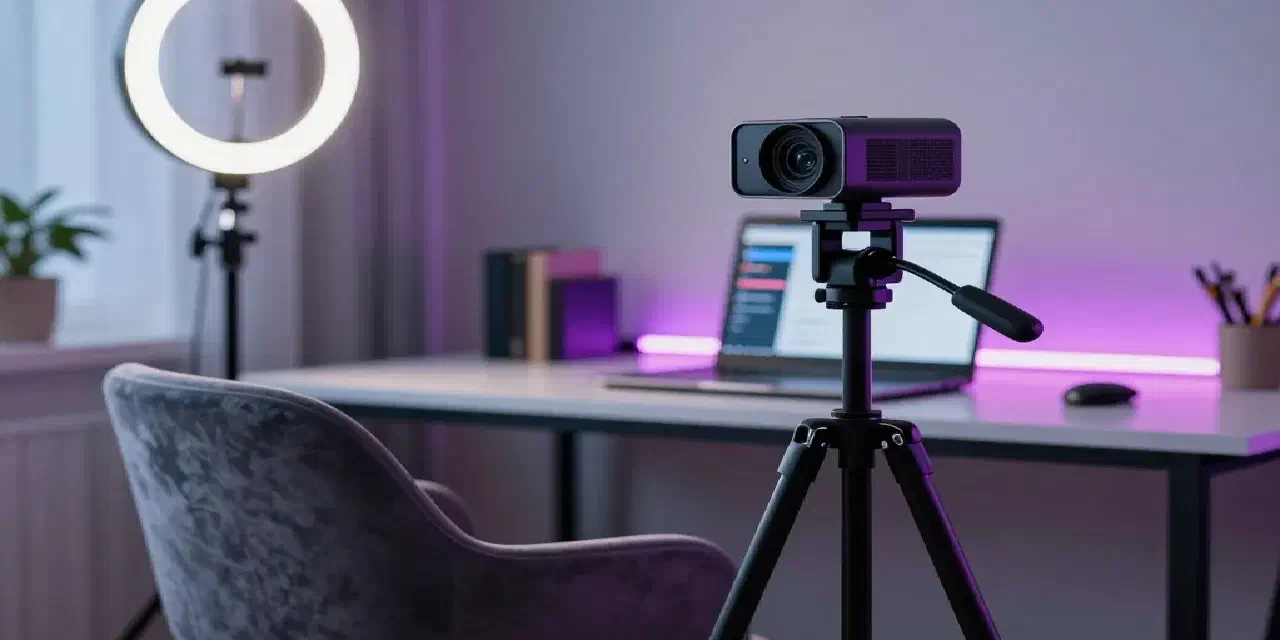
You don’t need a commercial studio to start, but you do need reliable lighting, a high-definition camera, and a clean, private space. A ring light, a good microphone, and a wired internet connection are non-negotiable—stream interruptions kill momentum. By 2026, 4K webcams are the baseline, and viewers expect crisp video and clear audio, so prioritize technical quality over fancy props. A simple yet effective setup—camera, two softbox lights, and a USB condenser mic—will cost between €300 and €700 total. Position the camera at eye level, frame yourself against a neutral or textured background, and test for echo before your first live show. Privacy is paramount: lock the door, hang a “do not disturb” sign, and use a dedicated space where you control ambient noise and lighting. Skip Wi-Fi entirely; a wired Ethernet connection ensures your stream doesn’t drop during peak earning hours. And always keep a backup camera and microphone ready, because technical failures translate directly into lost tips and eroded viewer trust.
Developing a Unique Persona and Content Strategy
Successful models build a recognizable brand identity. Choose a stage name, define your niche—cosplay, fitness, conversational—and stick to a consistent posting schedule. Your niche must align with your genuine interests; viewers can spot performative fakery in seconds. If you love gaming, lean into a “gamer girl” persona with themed overlays and trivia nights. If you’re athletic, host workout Q&A sessions before your main cam show. Consistency beats frequency: three polished, four-hour streams per week outperform seven rushed, hour-long ones. Use social media to tease content and drive traffic to your camming profiles, but always respect platform rules on adult content promotion. Post behind-the-scenes shots, poll your audience on upcoming themes, and share non-explicit clips on TikTok or Instagram to build a funnel. Your persona should feel authentic enough to attract loyal regulars who tip generously; in 2026, top earners cultivate communities, not just audiences. Set boundaries early—what you will and won’t do on camera—and spell them out in your profile. A content calendar planned two weeks ahead prevents burnout and keeps your room fresh. Track which days and times yield the highest tips per hour, then double down on those slots. Finally, reinvest 10% of early earnings into better props, outfits, or lighting; your brand will evolve, and your audience will reward that growth.
Marketing and Audience Growth
Leveraging Social Media and Search Engines
Relying on organic reach from mainstream platforms like Instagram or TikTok is effectively over for adult creators. By 2026, algorithm suppression and shadow-banning are so prevalent that your time is better spent on adult-friendly social networks and niche forums where your target audience already gathers. Treat these platforms as your top-of-funnel traffic source, but do not make them your home base—use them as a discovery layer. Your primary goal on any social profile is to turn a casual scroller into a subscriber on a platform you control. Optimize every bio with high-intent keywords like “live cam model,” “private shows,” or “fetish-friendly streamer,” because search engines still index these profiles, and users actively search for those terms. More importantly, start a simple blog or newsletter immediately. An email list is the only asset no algorithm can take from you. Send a weekly update announcing your live show schedule, and offer a free wallpaper or short teaser video as a sign-up incentive. Email marketing delivers the highest retention rates in this industry because it reaches fans directly in their inbox, bypassing the noise of social feeds.
Using Promotions and Cross-Platform Bundles
Your schedule will have dead hours, and relying solely on organic discovery will stall your growth. Combat this with aggressive, time-sensitive promotions. Offer new-viewer discounts—like 20% off a first private show—to lower the barrier for hesitant first-timers. Bundle private shows with exclusive content, such as a 30-minute session plus a custom photo set, to raise the average transaction value. Run limited-time promotions during off-peak hours, typically weekday mornings or late nights, to fill your calendar when traffic is naturally low. Simultaneously, cross-promote your accounts across platforms: tease content from one site on another and funnel followers toward the platform with the most monetization potential. Finally, track every promotional channel meticulously. Use unique tracking links to see whether traffic comes from Twitter, Reddit, or a specific forum. Double down on the two channels yielding the highest return on your time, and cut the rest without hesitation. Growth here isn’t about being everywhere—it’s about being strategically visible where your most loyal spenders already are.
Long-Term Sustainability and Legal Protection
Protecting Your Privacy and Digital Security
Your anonymity is your most valuable business asset; losing it can end your career overnight. Treat your real identity like a vault. Invest in a reputable VPN that runs on all your devices, and use a separate business phone number—ideally a VoIP service—for platform verification and fan communication. Never use your home address for anything; rent a PO box or use a virtual mailbox for physical mail, including tax documents and brand partnership packages. Adopt a strict rule: never share personal identifying information with viewers, no matter how much they offer. Weekly, reverse-image-search your content using tools like Google Lens or specialized cam-site piracy trackers. By 2026, deepfake technology has become alarmingly accessible, so watermark every piece of content you produce—both visible watermarks on the video itself and invisible metadata tags. Consider digital fingerprinting services, which generate a unique hash for your files and let you automatically file DMCA takedowns across hundreds of sites with a single click. This proactive defense isn’t paranoia; it’s standard operating procedure for any professional planning to work beyond a few months.
Planning for Career Transitions and Exit Strategies
Webcam modeling can be extremely lucrative, but it’s rarely a lifelong career. The average active career spans just a few years, so build your financial runway now. Automatically set aside at least 20% of your income into a retirement account and a separate emergency fund, treating that money as non-negotiable overhead. Simultaneously, invest in skills that transfer to other industries—digital marketing, video editing, customer relationship management, or event production. These skills keep you employable long after you stop camming. If you scale into running a studio with other models, your legal obligations multiply. You need a written, signed agreement with every model that explicitly outlines content ownership, revenue splits, usage rights, and a reasonable non-compete clause (typically six to twelve months, restricted to specific platforms). Don’t copy a template from the internet; consult an entertainment attorney specializing in adult work to ensure your contracts are enforceable in your jurisdiction. A proper contract costs from €500 to €2,500 per review, but it shields you from catastrophic lawsuits and content theft. Your exit strategy isn’t an afterthought—it’s the foundation that lets you perform without desperation.
Starting a webcam model business in 2026 isn’t about luck or sheer visibility anymore. It’s a strategic blend of niche selection, consistent scheduling, and diversifying your audience across multiple platforms. The real takeaway? Profitability comes from treating your webcam presence like an actual business. That means investing in quality lighting and audio, using AI-driven analytics to pinpoint peak viewer times, and building a loyal fanbase through exclusive content and direct engagement. Your next move is simple: choose one specific niche you’re genuinely comfortable with, set up a dedicated broadcasting space, and commit to a four-week testing period on a single platform before you expand. Remember, the winners here aren’t the loudest—they’re the most prepared and repeatable. Start small, track your metrics, and scale only what actually works.
Frequently asked questions
What legal and age requirements do I need to meet to start a webcam model business in 2026?
How do I choose the right webcam platform in 2026?
What equipment do I actually need to start, and what can I skip?
How should I handle taxes and business registration for this venture?
What are the best ways to build an audience without using my real name or face (if I want to stay anonymous)?
How do I set my rates and pricing structure in 2026?
What are the biggest safety and privacy risks in 2026, and how do I mitigate them?
How much time should I plan to dedicate weekly, and what does a typical schedule look like?
What are the common mistakes new webcam models make, and how can I avoid them?
How do I handle chargebacks, refunds, and difficult viewers in 2026?
Related guides
The Real Cost of Starting a Webcam Model Business: A Complete Expense Breakdown
Thinking about camming? Discover the true webcam model business startup costs and expenses, from equipment to marketing, in this complete financial breakdown.
Read more
From Bedroom to Bank Account: The Complete Guide to Running a Profitable Webcam Business from Home
Learn how to run a profitable webcam modeling business from home. Get setup tips, legal advice, and marketing strategies to maximize your income.
Read more
Webcam Modeling as a Business: The Real Profit Numbers and Hidden Costs
Thinking about webcam modeling as a business? See the real profit numbers behind the income, plus the hidden costs that impact your true earnings.
Read more