From Bedroom to Bank Account: The Complete Guide to Running a Profitable Webcam Business from Home
Learn how to run a profitable webcam modeling business from home. Get setup tips, legal advice, and marketing strategies to maximize your income.
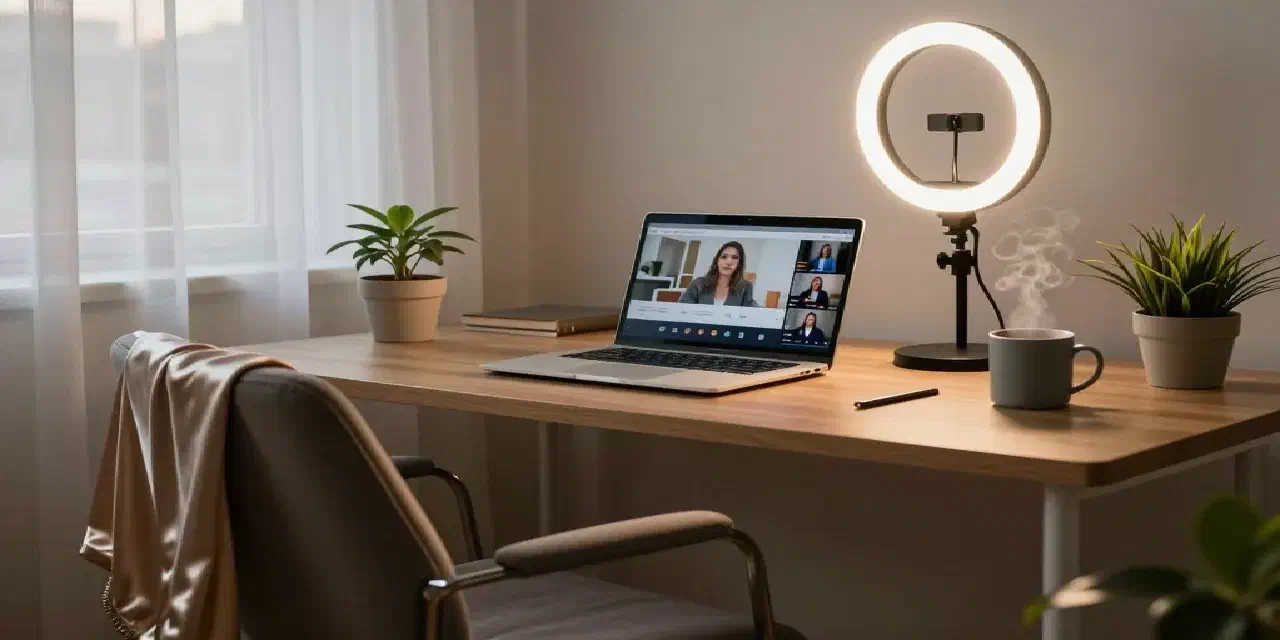
The dream of working from home often collides with the reality of unpredictable income—but the webcam industry offers a rare path where your own space, schedule, and persona become the product. Whether you’re just exploring this or already started and feeling stuck, this guide turns vague ambition into a concrete, actionable blueprint. You’ll learn how to legally register your business, build a studio that boosts viewer engagement, and apply pricing and retention strategies that convert casual fans into steady revenue. Beyond the money, we address the critical safeguards for your anonymity and mental well-being, keeping your home a sanctuary, not a source of stress. By the end, you’ll have the confidence and toolkit to run a webcam business that is both professionally sound and genuinely profitable.
Legal Foundations and Business Structure
Registering Your Business and Meeting Age Requirements
Before you ever turn on a camera or create an account on a streaming platform, you must establish that you are legally permitted to do this work. The first and non-negotiable requirement is age: you must be at least 18 years old. Every reputable platform and payment processor will ask for a government-issued ID—a passport, driver’s license, or national ID card—and will verify it against your face and your legal name. There is no workaround here, and attempting to use false documents will permanently bar you from the industry.
Once your age is confirmed, you need to decide how you will legally earn income. The simplest starting point is to register as a self-employed individual or sole proprietor in your country. However, if you want to protect your personal assets—your home, car, and savings—from any business-related liability, forming a limited liability company (LLC) is a smarter move. An LLC separates your personal finances from your business finances, which matters greatly in this line of work where disputes over chargebacks, content leaks, or contractual issues can arise. The cost to form an LLC varies by state or country, but you can generally expect to pay from $50 to $500 in filing fees, plus annual renewal fees. You should also check whether your local municipality requires a home-based business permit or license for digital services; some cities do, and operating without one can result in fines.
Crucially, keep all registration documents—your LLC formation papers, business permits, and tax ID numbers—in a separate folder, both physical and digital, away from your personal records. This separation will make tax time infinitely easier and protect your privacy if a platform ever experiences a data breach.
Tax Obligations and Reporting
All earnings from webcam modeling must be reported to tax authorities, whether you receive them via platform payouts, wire transfers, PayPal, or cryptocurrency. Tax rates and filing rules vary by country and state, so consult a tax professional familiar with digital content work.
The golden rule of this business is that no income is “off the books.” Every tip, private show fee, and merchandise sale counts as taxable income. You should track each payment meticulously, using a spreadsheet or accounting software, and record the date, source, and amount. Set aside a percentage of every payout for estimated taxes—commonly 25% to 35% of your net earnings, depending on your total income bracket—so you are never caught short at filing time. You must also understand self-employment tax, which covers Social Security and Medicare in the U.S., and whether your state or country imposes sales tax on digital services. Finally, mark quarterly filing deadlines on your calendar; most self-employed workers must pay estimated taxes four times a year, not just once. Missing these deadlines triggers penalties and interest, which eat directly into your profit margin.
Home Studio Setup and Technical Requirements
Creating a Private, Professional Space
Your physical environment silently shapes your brand. Absolute privacy comes first: use a lockable room that no one else can enter during your working hours. This is non-negotiable for both safety and peace of mind, letting you perform without the dread of an unexpected interruption.
Inside that room, your background is your stage. Choose a neutral, clean backdrop or a themed setup that deliberately mirrors the persona you’ve built for your audience. A minimalist wall with one tasteful art piece, a cozy reading nook with warm shelves, or a sleek, modern aesthetic all work. Crucially, keep personal items out. Remove anything that hints at your real name, your family, your location, or your daily life—no mail, no photographs, no identifiable landmarks outside a window. Your work persona exists in a vacuum, and your background must uphold that illusion.
Technical quality separates a professional broadcast from a home video. Invest in a high-resolution webcam that captures at least 1080p video; a 4K camera is a worthy upgrade if your budget allows. Your internet connection is your lifeline. A stable, wired ethernet connection is mandatory, with an upload speed of at least 10 Mbps to ensure a smooth, uninterrupted stream. Wi-Fi is too prone to interference and signal drops. Lighting transforms your image equally. A ring light placed directly in front of you delivers even, flattering illumination, while a two-point softbox setup gives you more control and depth, eliminating harsh shadows and producing a polished, cinematic look.
Audio, Backup, and Maintenance
Viewers forgive a slightly grainy image far less readily than poor audio. An external USB or condenser microphone captures your voice with clarity and warmth, far surpassing the tinny, echo-prone sound of built-in mics. Before every session, run a quick sound check to confirm levels are balanced and there’s no background hum or distortion.
Murphy’s Law is a constant in live streaming. Equipment fails at the worst moment. Prepare by keeping a backup webcam, a spare lighting bulb, and an extra ethernet cable within easy reach. A five-minute swap is a minor hiccup; a cancelled show from a dead bulb costs income and viewer trust. Finally, treat your equipment like the professional tool it is. Schedule a weekly check to clean lenses, dust your lighting rig, and ensure all cables are secure. Keep your streaming software and drivers updated to prevent compatibility glitches and access new features. This preventative maintenance is a small time investment that pays dividends in reliability and professionalism.
Payment Processing and Financial Management
Setting Up Business Banking and Payment Methods
To run a professional webcam business, you must first separate your personal life from your enterprise. Open a dedicated business bank account—even a simple checking account works—to keep income and expenses distinct. This one move simplifies tax season, shields your personal assets, and offers a clear view of your profitability.
Your main income will likely come from platform payouts, where the site processes viewer tips and private show fees. Yet depending on a single channel is risky. Diversify with direct payment methods for private sales, custom content, or off-platform sessions. Wire transfers, PayPal, and cryptocurrency wallets are common choices, each with trade-offs. Wire transfers are dependable but slow; PayPal is convenient but may freeze funds if adult activity is detected; crypto provides anonymity but suffers from price swings. Above all, confirm that any processor you pick explicitly accepts adult content. Many mainstream options—including certain major credit card gateways—ban it outright, so scrutinize terms of service before committing.
Tracking Income, Expenses, and Deductions
A profitable cam business demands that you know precisely where every euro, dollar, or pound flows. Log all business income and expenses in a spreadsheet or accounting software such as QuickBooks or Wave. Update it weekly, not monthly, to prevent overwhelming backlogs.
Your deductible expenses can markedly reduce taxable income. Legitimate write-offs include cameras and lenses, lighting equipment, a dedicated computer or laptop, and a proportional share of internet and phone bills—track the business-use percentage. A room used exclusively for streaming allows a home office deduction on part of your rent or mortgage. Website hosting, advertising, and props or outfits for shows are also deductible.
Never guess at figures. Keep every receipt, digital invoice, and bank statement organized, whether in a physical folder or cloud storage, and retain them for at least three years in case of an audit. As income grows, consider hiring a tax professional experienced with independent contractors and adult-industry specifics. Their fee is deductible, and they can guide you through quarterly estimated payments, preventing a surprise year-end bill. A disciplined financial system turns your bedroom hobby into a legitimate, thriving venture.
Content Ownership, Licensing, and Direct Sales
Understanding Platform Licenses and Your Rights
When you perform on a webcam platform, you typically grant that platform a non-exclusive license to stream and record your content. This does not transfer ownership, but it allows the platform to use your performances for broadcasting, archival, and promotional purposes. In plain terms, you still own the footage—the platform simply has permission to show it. However, the exact scope of that permission varies wildly from site to site. Some platforms claim the right to redistribute your streams across partner networks; others restrict usage to their own domain. Read each platform’s terms carefully to know your rights. Look specifically for clauses about “sub-licensing,” “derivative works,” and “territorial restrictions.” If a term feels vague or overly broad, treat it as a red flag. You are not being paranoid—many models have discovered their old streams resurfacing on aggregator sites because they failed to review the fine print.
If you sell clips or photos directly, you retain full copyright. That means you control reproduction, distribution, and future licensing. You can pull a product from sale, re-edit it, or license it to a niche site for a fee. This is a significant advantage over platform-only work. For any collaborator, obtain a signed model release to protect your legal standing. Even if you work with a partner you trust completely, a release protects you if that person later claims you misused their image. The release should specify the content type, permitted uses, and compensation. Keep digital copies of every signed release in a secure, organized folder.
Building a Direct Sales Channel
Creating your own direct sales channel is the most effective way to move from earning per-minute wages to earning per-product revenue. Start by building your own website or use a clip store to sell pre-recorded content. A simple WordPress site with a payment gateway works well, but established clip platforms offer built-in traffic and payment processing. Price clips and photo sets based on length, exclusivity, and demand; typical ranges are from $5 to $50 per clip. A 10-minute solo video might sell for $10 to $15, while a custom fetish video with your face and voice could command $40 to $50. Photo sets run from $5 to $20 depending on resolution and theme.
Promote your direct sales through social media and email lists, but never share personal information. Use a stage name that is distinct from your legal identity, create a dedicated business email, and keep your physical address off all public profiles. Your email list is your most valuable asset—it lets you announce new drops, run flash sales, and build a loyal customer base that does not depend on a platform’s algorithm. Consistency matters more than volume: one high-quality clip per week, promoted well, will outperform sporadic uploads with no marketing push.
Safety, Privacy, and Income Sustainability
Protecting Your Identity and Location
Your anonymity is the most critical asset in your webcam business. Once your real identity is linked to your performer persona, it cannot be unlinked. Start by choosing a distinctive stage name—one you use exclusively across all platforms. Never, under any circumstance, share your legal name, home address, or even your city. This includes casual chats with viewers who seem friendly. Trust builds gradually, but information is permanent.
For all non-streaming activities—email, social media, payment logins—route your traffic through a reliable VPN. This keeps your IP address from exposing your physical location to anyone tracing your digital footprint. Also, geo-block your home state or country entirely on streaming platforms. Yes, this shrinks your potential audience, but it drastically lowers the chance that a neighbor, coworker, or family member stumbles upon your profile. Many experienced models go further: they use a separate phone number for business and keep their streaming space visually neutral, with no identifying photos, mail, or regional décor in the background.
Managing Income Variability and Long-Term Growth
Earnings depend on hours streamed, audience size, tip rates, and private show pricing. Private show rates typically range from $1 to $5 per minute, and monthly net income can range from a few hundred to several thousand dollars—but there is no guaranteed income.
Because your income is inherently unpredictable, treat this as a business requiring strategic planning, not a lottery ticket. Set a consistent streaming schedule and stick to it. Viewers return to familiar faces at predictable times, and platform algorithms reward regular activity. That consistency builds a loyal base that tips more reliably than random drop-ins.
Diversification is your safety net. Don’t rely solely on live tips. Actively sell pre-recorded clips, offer custom video requests at premium rates, and position private shows as your highest-value offering. Each revenue stream buffers the others during slow periods. Finally, reinvest a portion of your earnings into better lighting, a higher-quality camera, targeted social media marketing, and professional development like workshops on negotiation or content marketing. This reinvestment compounds your earning potential and keeps your business viable as trends and platform policies evolve.
Conclusion
Building a profitable webcam business from your bedroom is not about luck—it is about treating your passion like a serious enterprise. Establish a proper legal structure, invest in a professional studio space, track every dollar with discipline, and guard your privacy with unshakeable rigor. That transforms a side hustle into a sustainable income stream. The foundation you lay today—from contracts to camera angles—determines the ceiling you reach tomorrow. So take the first concrete step this week: draft your business plan and set up a dedicated, distraction-free filming corner. Your bank account will thank you when consistency meets professionalism.
Frequently asked questions
What equipment do I need to start a webcam modeling business from home?
How do I choose the right platform to broadcast on?
What are the legal and tax considerations for running this business from home?
How can I protect my identity and privacy while camming from home?
What should I charge for private shows and tips?
How do I build a regular audience and keep them coming back?
What are the best ways to market my webcam business without using social media?
How do I handle difficult or abusive viewers while maintaining a professional demeanor?
What are the typical costs of running this business from home each month?
How can I maintain a healthy work-life balance when working from home as a cam model?
Related guides
The Real Cost of Starting a Webcam Model Business: A Complete Expense Breakdown
Thinking about camming? Discover the true webcam model business startup costs and expenses, from equipment to marketing, in this complete financial breakdown.
Read more
Webcam Modeling as a Business: The Real Profit Numbers and Hidden Costs
Thinking about webcam modeling as a business? See the real profit numbers behind the income, plus the hidden costs that impact your true earnings.
Read more
The 2026 Camming Playbook: How to Launch a Profitable Webcam Model Business From Zero
Start a profitable webcam model business in 2026 from zero. Step-by-step guide on gear, platforms, pricing, and marketing to launch and grow fast.
Read more